

Why Africa is the next big market for cosmetics and beauty products
Africa has firmly established itself as one of the world's most exciting consumer markets. While global economic growth has slowed in many developed economies, Sub-Saharan Africa continues to be one of the fastest-growing long-term consumer regions, driven by rapid urbanization, rising incomes, digital transformation, and the world's youngest population. Today, the continent is home to approximately 1.55 billion people, with more than 1.2 billion living in Sub-Saharan Africa. According to United Nations projections, Africa's population will exceed 2.5 billion by 2050, representing nearly one-quarter of the world's population.
This remarkable demographic expansion is creating enormous opportunities for the cosmetics, personal care, fragrance, haircare, and wellness industries. Consumer expenditure across Africa is forecast to exceed US$2.5 trillion annually by 2030, while the continent's combined GDP is expected to approach US$4 trillion over the coming decade. As disposable incomes rise and millions of consumers join the middle-income segment, demand for quality beauty and personal care products continues to accelerate across virtually every African market.
East Africa alone is now home to over 500 million people, making it one of the fastest-growing regional markets globally. Countries including Kenya, Tanzania, Uganda, Ethiopia and Rwanda are witnessing rapid expansion in modern retail, shopping malls, e-commerce platforms, pharmacies, supermarkets and beauty specialty stores, all of which are increasing access to international beauty brands.
Why Africa?
Africa represents one of the last major untapped consumer frontiers. The continent combines a rapidly expanding population with rising urbanization, improving infrastructure, increasing internet penetration, mobile payment adoption, and a growing middle class.
According to the United Nations, Africa's population is expected to reach approximately 2.5 billion by 2050 and nearly 3.9 billion by 2100, making it by far the fastest-growing region in the world. More importantly for beauty companies, Africa possesses the world's youngest consumer base, with a median age of around 19 years, compared with approximately 39 years in Europe.
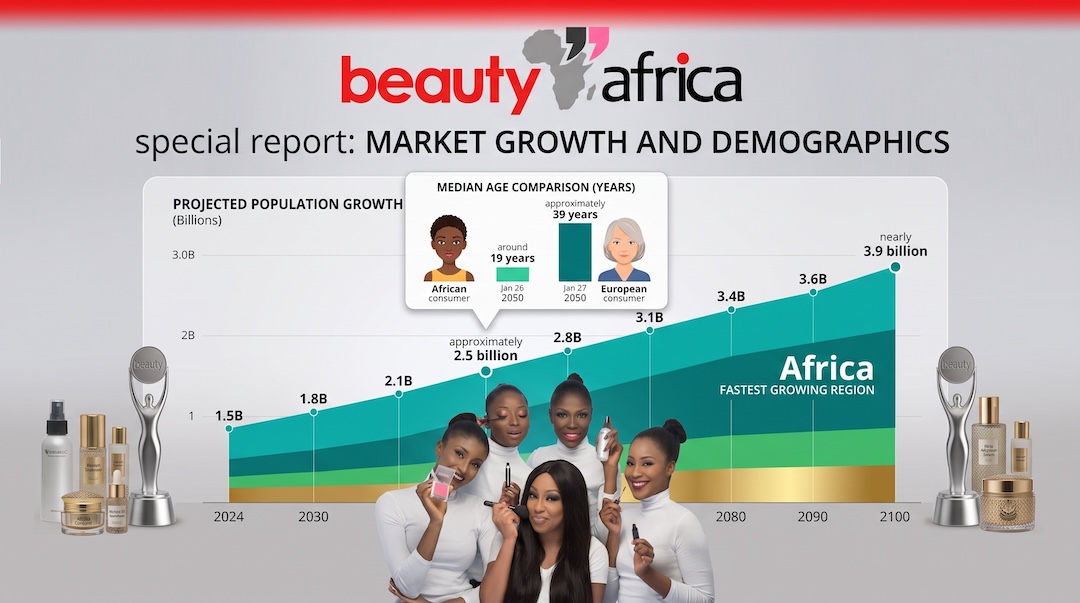
Young consumers are typically the earliest adopters of beauty trends, skincare routines, fragrances, cosmetics, barbering services, haircare products, and digital beauty content. Social media platforms including Instagram, TikTok and YouTube are transforming purchasing behaviour as influencers educate consumers on skincare routines, makeup techniques, natural hair care, and premium beauty products.
Africa is also urbanizing at an unprecedented pace. More than 600 million Africans now live in urban areas, and by 2035 cities will accommodate well over 700 million people. This urban migration is particularly significant for the beauty industry because city consumers generally have higher disposable incomes, better access to retail outlets, stronger exposure to international brands, and greater spending on personal appearance and grooming.
Rising Consumer Spending
Economic growth across Africa continues to strengthen household purchasing power despite short-term economic challenges. Consumer spending is increasingly being driven by a rapidly expanding middle-income population, greater female workforce participation, and improved access to financial services through mobile banking.
Africa's largest consumer markets continue to be led by:
South Africa
Nigeria
Egypt
Kenya
Morocco
Ethiopia
Ghana
Tanzania
Côte d'Ivoire
Algeria
Among Sub-Saharan markets, Nigeria, South Africa, Kenya, Ethiopia, Tanzania and Ghana remain the primary destinations for multinational cosmetics manufacturers, distributors and investors. These countries benefit from growing retail sectors, expanding supermarket chains, strong pharmaceutical distribution networks, and improving logistics infrastructure.
Africa's Expanding Affluent Consumer Base
The continent is also witnessing rapid growth in affluent consumers. Wealth migration reports continue to show increasing numbers of high-net-worth individuals (HNWIs), particularly in cities such as Lagos, Johannesburg, Nairobi, Cape Town, Casablanca, Cairo and Accra.
Nairobi remains one of Africa's fastest-growing wealth hubs, while cities such as Kigali, Dar es Salaam and Addis Ababa are also developing sizeable upper-middle-class populations with growing purchasing power.
Luxury beauty, prestige skincare, premium fragrances and salon-exclusive professional brands are benefiting from this shift, particularly among younger professionals seeking international-quality products.
Population Growth Creates Long-Term Demand
Unlike many mature economies facing ageing populations, Africa's demographic profile provides a sustainable foundation for decades of consumer growth.
More than 60% of Africans are under the age of 25, while approximately 70% are under 30. Every year millions of young consumers enter the workforce, creating sustained demand for:
Skincare
Haircare
Cosmetics
Men's grooming
Fragrances
Personal hygiene products
Beauty accessories
Salon equipment
Wellness products
Countries including Uganda, Tanzania, Zambia, Rwanda and Ethiopia continue to experience some of the world's highest population growth rates, creating expanding customer bases for both mass-market and premium beauty products.
Africa's Beauty Industry is Expanding Rapidly
Africa's beauty and personal care sector has evolved dramatically over the past decade. Demand is no longer limited to basic toiletries. Consumers are increasingly purchasing facial skincare, anti-ageing products, sun protection, professional haircare, colour cosmetics, natural beauty products, fragrances and premium personal care items.
International manufacturers continue to expand their presence through distributors, local manufacturing partnerships, franchise operations and e-commerce. At the same time, African beauty entrepreneurs are launching innovative brands that celebrate local ingredients such as shea butter, baobab oil, marula oil, moringa, black seed oil and African botanical extracts.
Many local companies outsource manufacturing to international contract manufacturers while focusing on branding, digital marketing and regional distribution, allowing them to compete effectively with established multinational brands.
Digital Commerce is Reshaping Beauty Retail
One of the biggest changes in Africa's beauty industry has been the rapid growth of digital commerce. Smartphone penetration, affordable mobile internet, and widespread adoption of mobile money have transformed the way consumers discover and purchase beauty products.
Beauty brands now reach customers through online marketplaces, social commerce, WhatsApp Business, Instagram Shops, TikTok creators and influencer marketing. Consumers increasingly rely on online reviews, beauty tutorials and live product demonstrations before making purchasing decisions. This digital ecosystem has significantly lowered the barriers for both local entrepreneurs and international brands seeking to enter African markets without an extensive physical retail footprint.
Demand for Inclusive Beauty Products
African consumers are increasingly seeking products specifically formulated for local skin tones, hair textures, climate conditions and beauty preferences. This shift has encouraged international manufacturers to develop more inclusive shade ranges, specialized haircare solutions and skincare products designed for melanin-rich skin.
At the same time, demand for clean beauty, vegan formulations, sustainable packaging and naturally derived ingredients is rising among younger consumers. Products containing indigenous African botanicals such as shea butter, baobab, marula, moringa and rooibos are gaining international recognition, creating opportunities for African manufacturers to compete globally while showcasing the continent's rich natural resources.
Men's Grooming Continues to Grow
Consumer behaviour has evolved significantly over the past decade. Women remain the largest buyers of cosmetics and skincare products, but men now represent one of the fastest-growing segments of the African beauty market.
Modern barber shops, grooming lounges and men's salons have become increasingly common across major African cities. Male consumers are purchasing facial cleansers, beard oils, moisturizers, fragrances, hair styling products, manicure and pedicure services, and premium grooming accessories. This expanding market presents significant opportunities for companies specializing in men's personal care products.
Urbanization Continues to Drive Beauty Consumption
Urbanization remains one of the strongest structural drivers of Africa's beauty industry. Consumers living in cities typically earn higher incomes, spend more frequently on personal care products, and are more exposed to global fashion and beauty trends through digital media.
Large metropolitan areas such as Lagos, Nairobi, Johannesburg, Cairo, Addis Ababa, Casablanca, Accra and Dar es Salaam continue to attract international retailers, shopping centres, pharmacies and specialist beauty chains. These urban hubs provide ideal launch markets for new beauty brands before expansion into secondary cities and neighbouring countries.
As modern retail infrastructure continues to develop across the continent, Africa is expected to become one of the world's most dynamic beauty and personal care markets. For international manufacturers, distributors and investors seeking long-term growth, the continent offers a unique combination of demographic momentum, rising consumer spending, expanding retail channels and an increasingly sophisticated beauty-conscious population.
Did You Know?
Africa's cosmetics and beauty market is one of the fastest-growing sectors in the world. Here are some key statistics driving this retail boom:
- • Double the Global Growth: Africa's beauty and personal care market is growing at 8% to 10% annually, compared to a global average of just 4%.
- • $20 Billion Valuation: Driven by rapid urbanization and a rising middle class, the continent's beauty market is expected to exceed $20 Billion by 2030.
- • A Youthful Consumer Base: Over 70% of Sub-Saharan Africa's population is under the age of 30, creating a highly brand-conscious and active cosmetics consumer base.
- • Rising Purchasing Power: Increased workforce participation has boosted disposable income for African women, with a significant portion allocated to skincare, haircare, and personal grooming.